
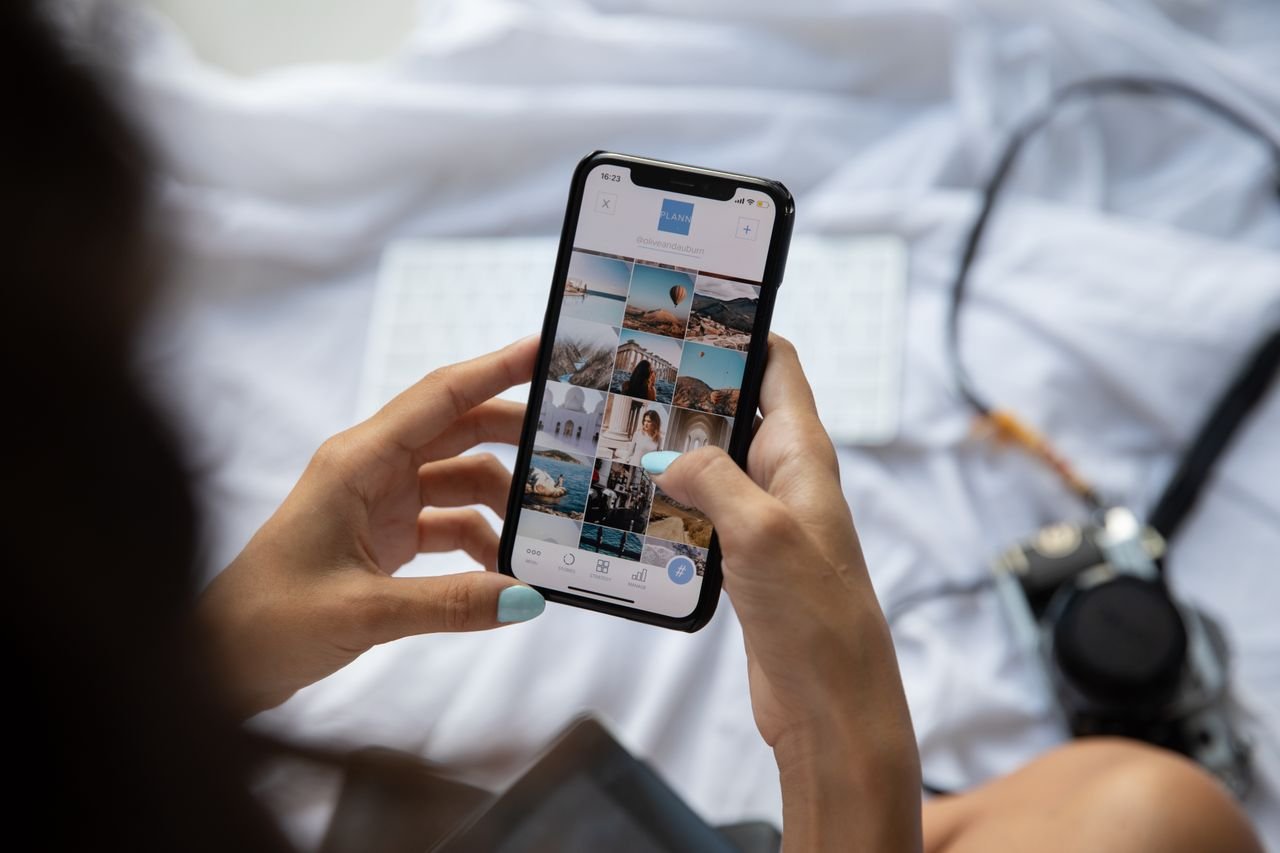
It happens in about half a second. You’re scrolling, minding your own business, and then there it is: someone’s morning routine, someone’s new apartment, someone’s “small update” that’s actually a new job at a company you’ve heard of. That’s what comparing yourself online actually feels like: half a second, and your stomach drops. Not because anything about your life changed in the last five seconds. Just because you saw something.
I used to think that feeling was about the other person. Like I was jealous of them, specifically, and if I just stopped following certain accounts the feeling would go away. Sometimes that helps a little. But it never fully explains why the same feeling shows up with people I don’t even know, on posts that have nothing to do with me. If you’ve read my post on why you’re not lazy, you’re just out of energy, this might sound familiar, another case of a feeling that isn’t really about what it seems to be about. Which made me start paying closer attention to what was actually happening in that half-second, instead of just reacting to it.
Table of Contents
Why comparing yourself online hits differently now
It’s not new to compare yourself to other people. That’s an old, human thing, we’ve probably always sized ourselves up against neighbors and classmates and whoever we happened to be standing next to. What’s different now is the sheer volume of people you’re being compared to, and the fact that what you’re seeing isn’t really their life. It’s the version of their life they chose to show you, edited, timed, sometimes staged, and picked from probably a dozen other moments that didn’t make the cut.
Meanwhile, what you’re comparing it to is everything. Your full, unfiltered day. The version of you that hasn’t showered yet, that’s behind on three things, that looks nothing like a highlight reel because it’s not supposed to be one. You’re not comparing two lives. You’re comparing your footage to their trailer, and the trailer always looks better because that’s the entire point of a trailer.
Knowing that doesn’t make the feeling disappear, though. I still catch it happening even when I logically know better. Which is what made me start asking a different question, not “why do they get to have that,” but “why did that specific post get under my skin today, when a similar one might have rolled right past me yesterday.”
I think about this every time I catch myself doing the thing I used to do without noticing: opening an app for one specific reason and then, twenty minutes later, somehow ending up deep in someone’s page comparing their life to mine, with no memory of how I got there. That’s the part that used to bother me most, not the comparison itself, but how automatic it was. I wasn’t even choosing to do it. It was just the default setting my thumb went to whenever there was a spare thirty seconds.
What you’re actually reacting to
Here’s what I’ve noticed, at least for myself: the posts that actually sting aren’t random. They tend to cluster around whatever I’m already feeling uncertain about. If I’ve been stressed about money, a friend’s vacation post lands differently than it would on a good week. If I’ve been second-guessing a decision, seeing someone else confidently doing the opposite thing feels like a personal jab, even though they have no idea I exist.
That’s the part that took me a while to actually sit with. The post isn’t creating the insecurity. It’s finding one that was already there and turning the volume up on it. There’s actual psychology behind this, social comparison theory describes how we measure our own worth by sizing ourselves up against other people, and that comparing “up” toward people who seem to be doing better tends to leave us feeling worse, not motivated. Which is honestly a little uncomfortable to realize, because it means the fix isn’t “avoid that kind of content.” It’s dealing with the thing underneath, which is a lot less convenient than just muting an account.
Take something like a wedding or engagement announcement. Most of the time I can scroll right past one, genuinely happy for whoever posted it, no weird feeling attached at all. Then every once in a while, the exact same kind of post lands completely differently, and I catch that little pang before I’ve even fully processed what I’m looking at. It’s never really about the couple. It’s whatever that post happened to bump into that day, some question I’ve been avoiding about my own timeline, or a comparison I didn’t realize I was already making before I even opened the app.
I think this is also why comparison doesn’t feel the same for everyone, or even for you on different days. Two people can look at the exact same photo and have completely different reactions, because they’re not really reacting to the photo. They’re reacting to whatever it happened to touch on the way past.
For me, it took actually sitting with an uncomfortable scroll for once, instead of closing the app the second it started to sting, to notice this. I’d expected to find some big obvious insecurity underneath it. Usually it was something smaller and a little embarrassing to admit, more like a specific worry I hadn’t looked at directly in a while, dressed up as jealousy so it was easier to brush past. Once I saw it for what it actually was, it got a lot less powerful. Not gone, just smaller, and easier to set down instead of carrying around for the rest of the day.
Once I started noticing that pattern, the scroll stopped feeling so much like something being done to me. It started feeling more like information. Not fun information, necessarily, but useful. If a specific type of post keeps getting to me, that’s usually pointing at something worth paying attention to on its own, separate from whoever posted it.
What’s actually helped

I want to be honest that “just log off” was never realistic advice for me, and I’m guessing it isn’t for you either. Social media isn’t going anywhere, and there’s plenty about it that’s genuinely good, staying in touch with people, finding things I actually care about, even just having something mindless to do while waiting in line. So instead of trying to avoid the feeling altogether, what’s actually worked for me is getting better at noticing it without immediately acting on it.
When that stomach-drop moment happens now, I try to pause for a second before doing anything else, before liking the post, before scrolling past it, before spiraling into “why don’t I have that.” I just ask myself what it actually touched. Sometimes it’s obvious right away. Sometimes it takes a minute. Either way, naming it takes some of the power out of it. It stops being a vague bad feeling and starts being something specific I can actually think about, instead of something that just sits in the background making the rest of my scroll feel worse.
I’ve also gotten more deliberate about unfollowing, but not in the “cut off anyone who makes me feel bad” way people sometimes suggest. That never made sense to me, because plenty of accounts that briefly sting are still people I genuinely like or care about. Instead, I pay attention to which accounts trigger that feeling repeatedly, over and over, on totally different posts. That pattern usually means it’s less about the content and more about some ongoing comparison I’m making with that specific person or type of life, and that’s worth being honest with myself about instead of blaming the algorithm.
The other thing that’s helped is remembering that the same trailer effect applies to me too. Whatever I post is also curated, also picked from a handful of options, also not the whole picture. Somebody else has probably had their own stomach-drop moment looking at something I shared, without any idea what was actually happening behind it. That doesn’t erase the feeling when it happens to me, but it does remind me the whole thing runs both ways, all the time, for everyone.
You’re allowed to enjoy it too
None of this means comparing yourself online has to become a heavy, examined thing every time you open the app. Most scrolling is fine. Most of it doesn’t touch anything at all, and that’s the majority of the time, honestly. It’s really just the specific moments that catch you off guard that are worth a second look, not the whole habit.
I still enjoy plenty of what I see online. I still follow people whose lives look nothing like mine. The difference now is that when the comparison feeling shows up, I don’t take it as proof that something’s wrong with my life. I take it as a small, occasionally annoying signal pointing at something I might want to think about later, on my own terms, not in the middle of a scroll.
So next time comparing yourself online gives you that half-second drop, before you close the app or spiral into a mental list of everything you don’t have, try asking what it actually touched. You might not like the answer right away. But it’s a much more useful question than “why do they get to have that,” and it’s one that actually leads somewhere, instead of just leaving you a little worse off than when you opened the app.
I still don’t always catch it in time. Some days the scroll wins and I close the app feeling worse than when I opened it, and that’s fine too. The goal was never to get it perfect, just to notice a little more often than I used to, and to be a bit gentler with myself on the days I don’t. If any of this resonates, you might also like what I wrote about quiet, unproductive hobbies, since a lot of it comes from the same place, not needing an audience or a measuring stick for something to count.
